
Find Content
Insulator 101 for engineers – part 1: What’s an electrical power-system insulator? Intro to types, uses and materials.
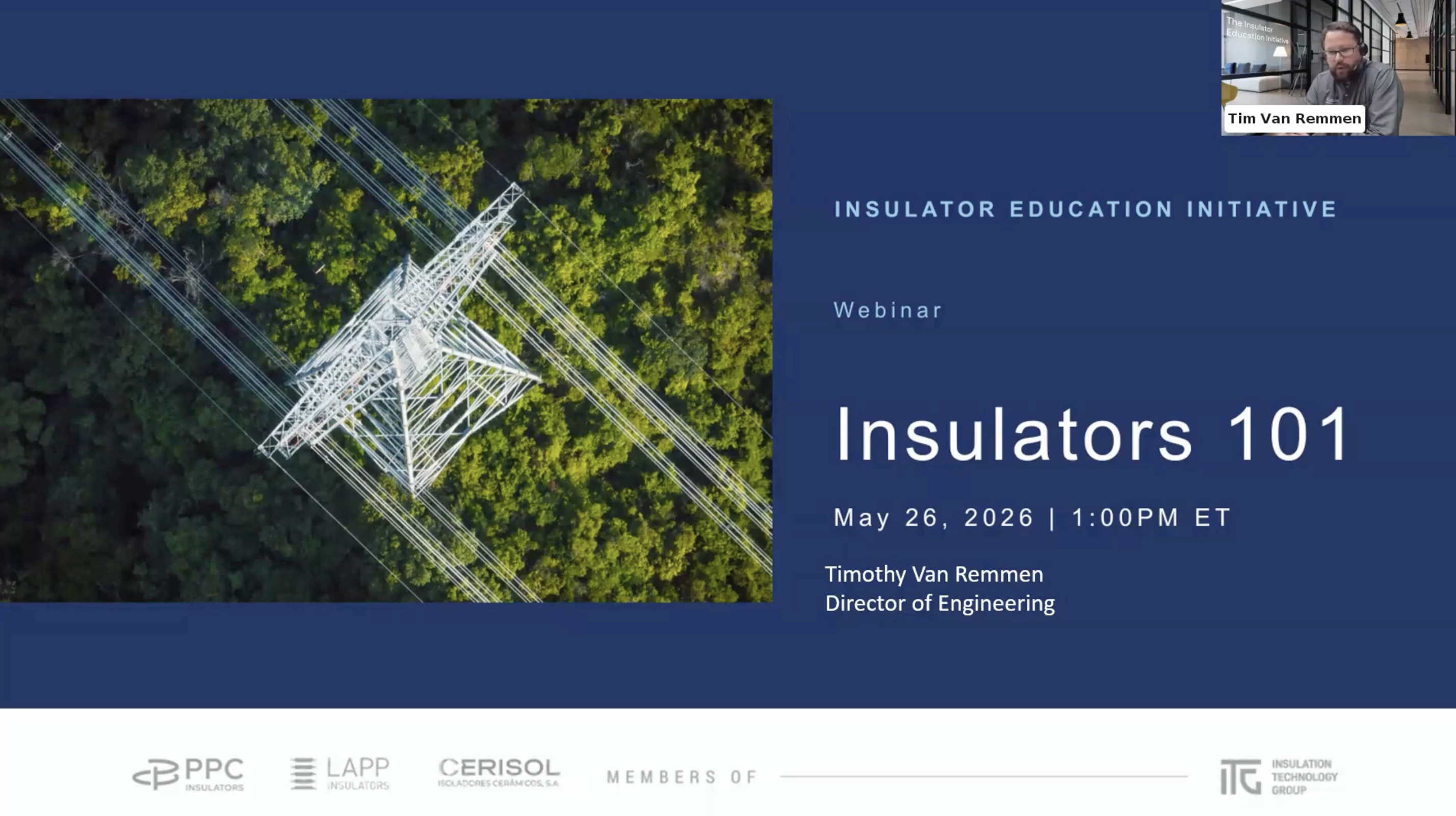
If you’re new to power-system insulators, you may find there’s a lot of information to navigate. In our new ‘Insulator 101’ series, we aim to ease this for you. In part one, Tim Van Remmen explains what is an electrical insulator for power systems is from an engineer’s perspective.
This article is based on Tim’s Insulator 101 webinar, hosted by the Insulator Education Initiative and Insulation Technology Group (ITG) in May, 2026
What’s an electrial power-system insulator?
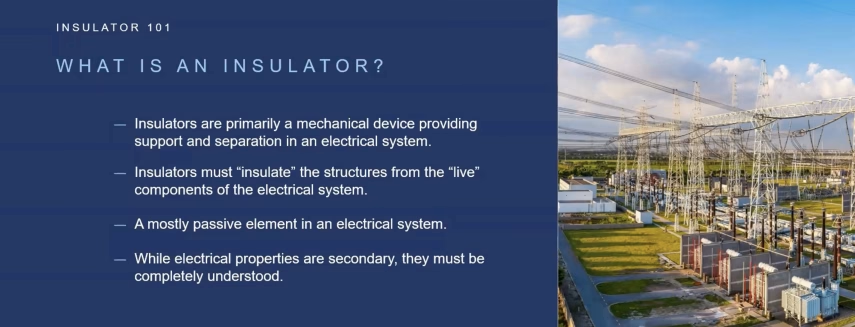
An electrical insulator for power systems separates electrically energised parts from other conductors, grounded structures or the surrounding environment. An insulator’s primary purpose is to provide mechanical support, holding other electrical components in place.
Insulators have to withstand electrical stresses, carry mechanical loads and survive the environment in which they operate.
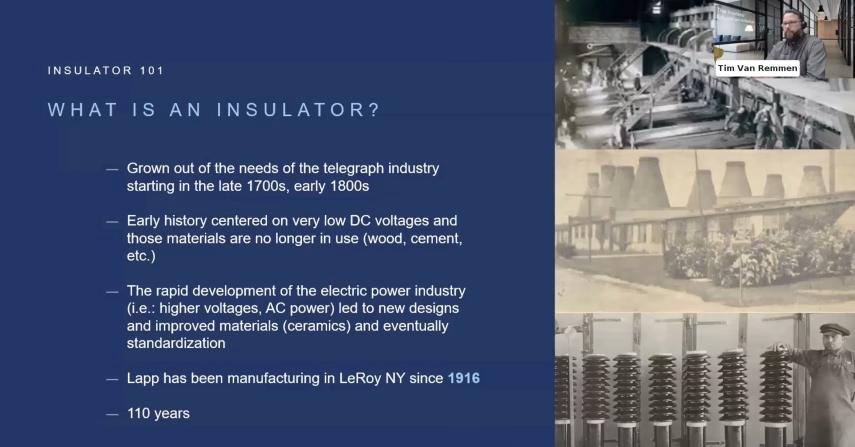
What does an insulator actually do?
In power-system engineering terms, an insulator’s job is generally understood to be twofold: providing electrical separation between energised parts and grounded structures, while also serving as a mechanical support for conductors and equipment.
1. Insulators provide mechanical support
Electrical power-system insulators are a structural component. Depending on the application, it may support the weight of a conductor, withstand wind and ice loads, carry tension, resist cantilever forces or support busbars and other electrical equipment.
This is why an insulator cannot be selected on electrical characteristics alone.
A design might have adequate electrical performance but be mechanically unsuitable for the application, or vice versa.
2. Insulators provide electrical isolation
An insulator also prevents an unwanted electrical path between an energised conductor and ground, or between conductors at different electrical potentials.
The insulator helps maintain the required separation while the system is operating at its normal voltage and during abnormal conditions such as overvoltages.
The surrounding air is also part of this insulation system. The dimensions and shape of an insulator help maintain the necessary air clearances and surface distances.
What types of insulators are there?
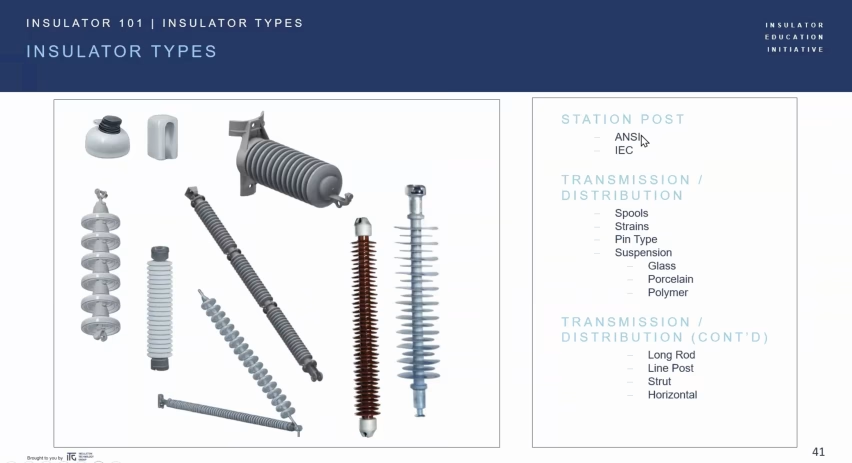
Here’s a summary of the different types of insulators you’ll come across in your designs for the grid:
Substation
- Station post (built to ANSI in the US and IEC internationally)
Transmission/distribution
- Spools
- Strains
- Pin type
- Suspension
- Long rod
- Line post
- Strut
- Horizontal
Where are insulators used?
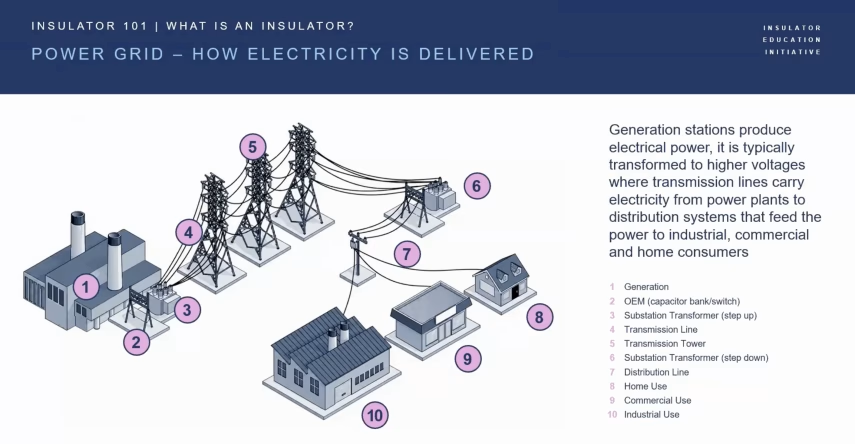
Insulators are found throughout electrical power systems. You’ll find them on:
- Transmission lines
- Distribution lines
- Substations and switchyards
- Busbar supports
- Transformers and other high-voltage equipment
- Other applications where energised parts need to be electrically isolated and mechanically supported
The shape and type of insulator changes according to the application.
A suspension insulator supporting a transmission conductor looks very different from a station post supporting busbar in a substation — but both are performing the same fundamental job: providing electrical insulation while carrying mechanical loads.
Why aren’t all insulators the same?
There is no single ‘best’ insulator. The design depends on the electrical, mechanical and environmental requirements of the application.
Some of the questions an engineer needs to answer include:
- What’s the system voltage?
- What overvoltages does the insulation need to withstand?
- How much electrical clearance is required?
- How much creepage/leakage distance is required?
- How much dry arcing/strike distance is required?
- What mechanical loads will the insulator experience?
- Is the insulator supporting a conductor, carrying tension or supporting equipment?
- Will it be installed upright or underhung?
- What are the pollution and contamination conditions?
- Is ice loading a concern?
- What are the temperature, UV and environmental conditions?
- What standards apply?
- What mounting arrangement is required?
The answers to these questions determine the type, material, dimensions and ratings of the insulator.
Electrical performance: keeping the current where it belongs
An insulator is intended to prevent current from taking an unintended path.
But outdoor insulators don’t operate in a perfectly clean laboratory environment.
Their surfaces can become wet or contaminated by substances such as salt, dust or industrial pollution. This can create a conductive path over the surface and increase leakage current.
An insulator’s rating is based on testing of a fresh clean new insulator. Once it’s been exposed to the environment, its performance may change due to contamination.
The shape of the insulator matters.
Creepage/leakage distance
Creepage/leakage distance is the distance measured along the insulating surface between conductive parts. This is the shortest path from line to ground along the surface of the insulator.
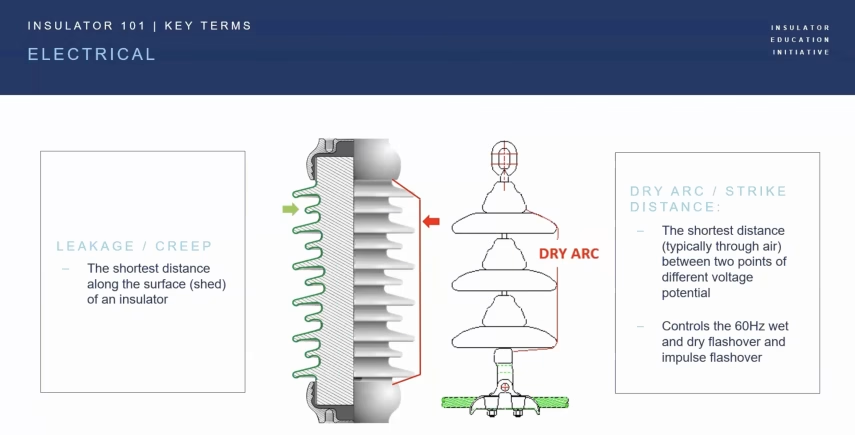
Sheds, ribs and other features are used to increase the surface path that leakage current would have to travel.
This is one reason outdoor insulators often have distinctive shed profiles.
The IEC standard for insulator terminology, IEC 60050-471 (International Electrotechnical Vocabulary – Part 471: Insulators), defines creepage distance as: “the shortest distance or the sum of the shortest distances along the surface on an insulator between two conductive parts which normally have the operating voltage between them.”
Note 1 –The surface of cement or of any other non-insulating jointing material is not considered as forming part of the creepage distance.
Note 2 – If a high resistance coating is applied to parts of the insulating part of an insulator, such parts are considered to be effective insulating surfaces and the distance over them is included in the creepage distance.
Dry arcing/strike distance
Creepage/leakage distance is not the same thing as the distance through air.
Dry arcing distance is associated with the shortest air path over which an electrical arc can develop between the relevant conductive parts.
These two dimensions solve related but different electrical problems. Understanding the difference between them is fundamental to insulator design.
We’ll look at both in much more detail in a later post on electrical design.
Mechanical performance: an insulator is a structural component
One of the most important ideas for anyone new to insulators is:
An insulator is not just an electrical component. It’s also a mechanical component.
The mechanical requirement depends heavily on the type of insulator. For example, a station post may have to withstand a significant cantilever load from busbar or conductor forces.
A suspension insulator string has a very different mechanical duty because it supports the conductor primarily in tension.
Mechanical ratings can include different types of loading, such as:
- Cantilever
- Tension
- Compression
- Torsion
- Combined loading
And the way the load is applied matters.
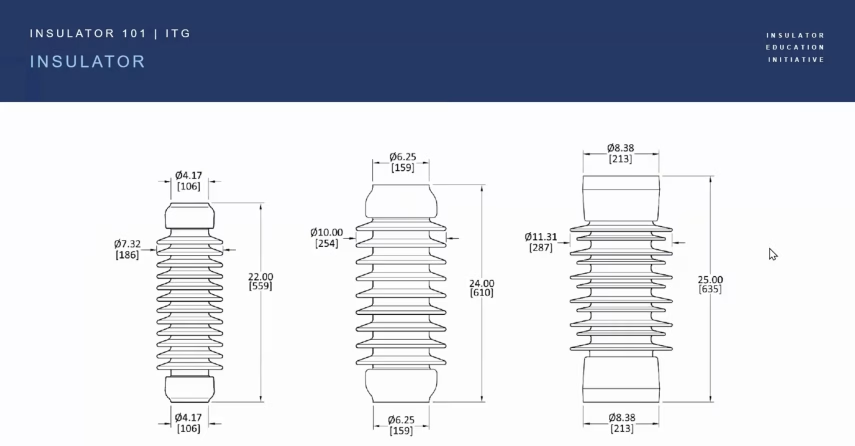
A force acting at a distance from the mounting point creates a moment, which is why an engineer can’t always evaluate a mechanical requirement simply by looking at a force rating.
M=F*D
Three stresses on insulators
A useful way to think about an insulator is that it has to withstand three broad categories of stress.
1. Electrical stress on insulators
The insulator must withstand:
- Normal system voltage
- Switching and lightning overvoltages
- Electric-field stress
- Wet conditions
- Surface leakage current
2. Mechanical stress on insulators
It may need to withstand:
- Conductor loads
- Wind
- Ice
- Short-circuit forces
- Seismic loads
- Installation loads
- Thermal expansion and contraction
- Other application-specific mechanical forces
3. Environmental stress on insulators
It may also be exposed to:
- Rain
- Salt
- Industrial pollution
- Ice
- UV radiation
- Temperature changes
- Wildlife or physical damage
- Long-term ageing
This is why selecting an insulator is an engineering problem rather than simply choosing a material with a high dielectric strength.
Insulator materials: porcelain, glass and composite
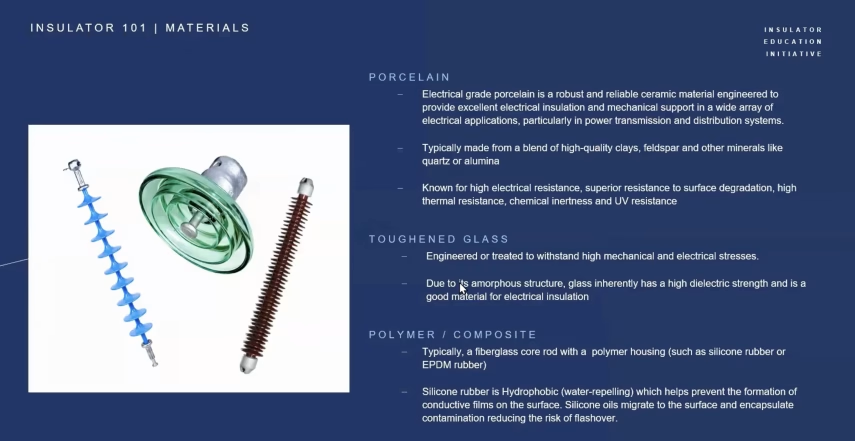
When they were first developed, insulators were made of wood. Now, we use three main materials for insulators, each with its own merits and detractors:
1. Porcelain (or ceramic) insulators
Porcelain has been used extensively in power-system insulators and remains a popular choice in applications including station posts, struts, suspension units and long rods. It’s long lasting, and can keep doing its job for 50 years, outdoors, in all weather.
One useful characteristic of porcelain is that it is a rigid ceramic material. Damage can produce chipping or cracking, whereas in polymeric materials, the damage might not be visible. Because porcelain damage is generally easy to spot during routine inspection, you can identify and replace affected units before they become a problem. See more here
2. Glass insulators
Toughened glass is widely used for suspension insulator units.
One practical characteristic is that a failed glass unit can often be visually identified because the insulating part shatters. See more here
3. Composite polymeric insulators
Composite insulators typically combine a mechanically strong core with a polymeric housing and sheds. Their low weight and hydrophobic surface properties can provide important advantages, particularly in polluted environments.
However, composites also introduce different considerations, including UV exposure and potential wildlife damage. See more here
Make sure you research the material trade-offs. Material selection is an engineering balance rather than a simple ranking of one material against another.
The most important idea to take away
If you remember only one thing from this introduction, make it: An insulator is both an electrical and a mechanical component that has to perform in the real environment where it is installed.
That means a good insulator design has to balance:
Electrical performance + Mechanical performance + Environmental performance
The rest of our Insulator 101 series will build on that idea.
What’s next?
In the next article, we’ll look at the different types of insulators and the materials they’re made from — including porcelain, glass and composite insulators, and the differences between suspension insulators, station posts, line posts, long rods, pins and other common configurations. To recieve the Insulator 101 series as they’re released, add your email address here
Next: Insulator types & materials (to come)
Insulator FAQs
What’s the primary purpose of an electrical insulator?
An electrical insulator provides electrical separation between energised parts and other conductors or grounded structures. In power systems, it provides mechanical support for conductors or electrical equipment.
Is an insulator only an electrical component?
No. In power-system applications, an insulator is primarily a mechanical component that happens to be made of a high dielectric material. It may need to carry conductor weight, tension, cantilever loads, wind, ice or other forces while maintaining its electrical performance.
What’s the difference between creepage/leakage distance and dry arcing/strike distance?
Creepage distance is measured along the surface of the insulator. Dry arcing distance relates to the shortest relevant path through air between conductive parts. They are different electrical design parameters and both can be important in determining insulator dimensions.
Why do insulators have sheds?
Sheds increase the surface path between conductive parts, increasing creepage/leakage distance. Their geometry also influences how water, contamination and leakage current behave on the insulator surface.
Why are there different types of insulators?
Different applications impose different electrical, mechanical and environmental requirements. A station post, suspension insulator and long-rod insulator, for example, perform different mechanical functions and are designed accordingly.
Which is better: porcelain, glass or composite?
There isn’t one universally better material. Porcelain, glass and composite insulators have different electrical, mechanical, environmental, manufacturing and maintenance characteristics. The appropriate choice depends on the application.
Can an insulator fail electrically without physically breaking?
Yes. An electrical flashover can occur across or around an insulator without necessarily meaning that the insulating body has suffered a physical failure. This distinction becomes particularly important when considering contamination and wet-weather performance. An insulator that fails electrically is often a failure of the application environment rather than the insulator itself. If the insulator was maintained or cleaned it may flashover.
What information do I need to select an insulator?
At a minimum, the application needs to be understood in terms of electrical requirements, mechanical loading, environmental conditions, mounting arrangement and applicable standards. More detailed specification may require parameters such as BIL, leakage/creepage requirements, mechanical ratings, munting patterns, seismic conditions, altitude and other application-specific requirements.